If you’re visiting Serbia and want to eat the way Serbians actually eat — at a table under walnut trees, with bread still warm from the oven and meat charred over hardwood coals — you’ll need to leave the city center. Most of the best food in Serbia isn’t in Belgrade’s pedestrian zone. It’s at family-run places in small towns where the kitchen starts with what the garden, the market, and the neighbors have today.
We’re the family behind Gostionica Karadjordje in Lazarevac, about 50 minutes southwest of Belgrade on the A2 highway. We put together this guide based on what our foreign guests most often ask us — and what we wish someone had told us the first time we sat down in a country we’d never eaten in before.
What should you eat in Serbia as a tourist?
Serbian cuisine is built on grilled meats, slow-cooked stews, fermented dairy, seasonal vegetables, and homemade bread — almost always served in portions large enough to share.
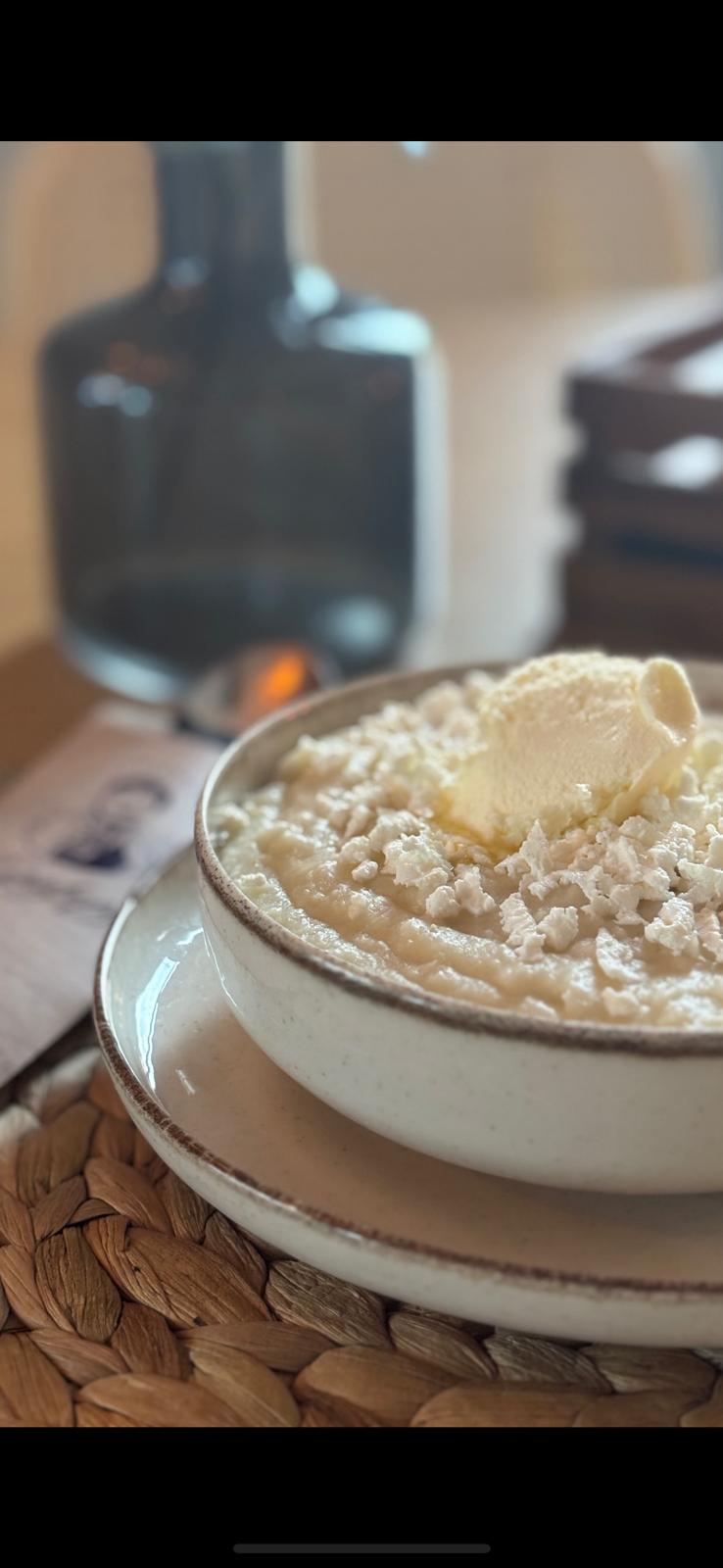
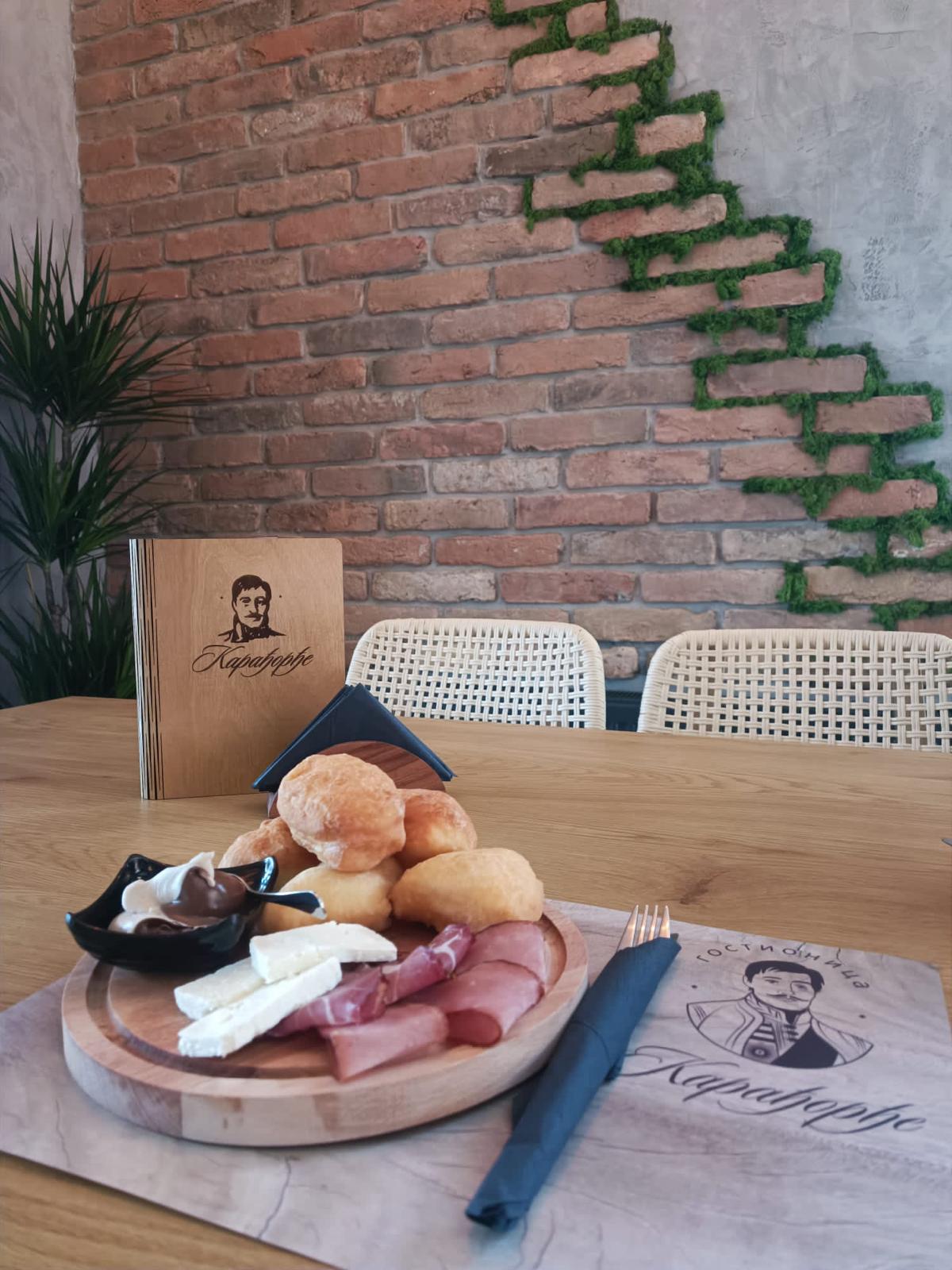
Start with the cold table: kajmak (a thick, tangy clotted cream aged in wooden barrels), ajvar (roasted red pepper and eggplant spread), and urnebes (a spicy cheese spread from southern Serbia). These arrive before your main course and you eat them with somun or lepinja — dense, slightly charred flatbreads.
The mains are where Serbian food earns its reputation. Cevapi (hand-rolled minced meat sausages), pljeskavica (a thick, seasoned burger patty), and vesalica (marinated pork strips) come off the grill smoky and crusted. Stews like pasulj (white bean soup with smoked meat) and sarma (cabbage rolls stuffed with seasoned pork and rice) show up in colder months. In summer, fresh shopska salata (diced tomatoes, cucumbers, peppers, and onion under a snowdrift of grated white cheese) sits on every table.
For dessert: tufahije (walnut-stuffed poached apples in syrup), palacinke (thin crepes with jam, chocolate, or ground walnuts), and whatever the house bakes that morning. At our place, the dessert menu changes depending on what fruit is ripe — we make tulumbe, ruzice, sampita, and various pite from scratch every day.
What is Karadjordjeva snicla?
Karadjordjeva snicla is a breaded and deep-fried rolled cutlet of veal or pork, stuffed with kajmak cheese, named after the 19th-century Serbian revolutionary leader Karadjordje. It is arguably Serbia’s most famous single dish.
The preparation matters more than the description suggests. The meat is pounded thin, spread with kajmak, rolled tightly, breaded in flour, egg, and breadcrumbs, then fried until the outside shatters and the inside is molten and rich. Done well, it’s the dish tourists photograph and then order again the next day. Done badly — which happens at places that pre-make them in bulk — it’s dry and forgettable.
It’s our namesake dish and we prepare each one to order. You can see our full menu — the snicla is listed alongside our complete grill program.
Where can you eat traditional Serbian food near Belgrade?
The best traditional Serbian food near Belgrade is found at family-run restaurants — called gostionica or kafana — in small towns within an hour’s drive of the capital, where kitchens still cook over real fire using local ingredients.
Belgrade itself has excellent restaurants, but the city center increasingly caters to international tastes. The real depth of Serbian cooking lives in the smaller places: Lazarevac, Arandjelovac, Topola, Mladenovac — the towns along the Kolubara and Morava river valleys. These are the places where the cook’s mother taught the cook, and where „local ingredients“ isn’t a marketing phrase but the default, because the farm is five minutes away.
Our restaurant sits at Vojvode Putnika 34 in Lazarevac. The drive from Belgrade Nikola Tesla Airport takes about 50 minutes via the A2 (Ibar Highway) toward Cacak. From Knez Mihailova or Kalemegdan, it’s roughly the same. The road is straightforward and well-marked. You can get directions and make a reservation here.
What are the best restaurants in Lazarevac, Serbia?
Lazarevac is a small town in the Kolubara district with a handful of genuine, locally rooted restaurants — not a tourist destination with a curated dining scene, which is exactly what makes eating here feel authentic.
You won’t find Lazarevac in most travel guides. It’s a working town known for the Kolubara mining basin, surrounded by rolling hills, farms, and villages that supply the restaurants with what they need. There’s no pretense. Menus are short because everything is made fresh. Prices reflect local economics, not tourist markup — expect to pay roughly 13 to 25 euros for a full meal with a drink.
We opened Gostionica Karadjordje here because this is where we’re from, and because the ingredients we cook with — the kajmak, the meat, the seasonal vegetables — come from producers we know by name within a 20-kilometer radius.
Where should you eat on a day trip from Belgrade?
If you’re taking a day trip from Belgrade, plan your lunch at a restaurant in a small town along your route rather than packing sandwiches or relying on highway rest stops — the food will be better, cheaper, and far more memorable.
A southwest route from Belgrade hits Lazarevac first (50 min), then continues to Arandjelovac (known for Bukovicka Banja spa and the marble park), Topola (the Oplenac royal complex and King Peter I’s mausoleum with its extraordinary mosaics), and eventually toward Rudnik mountain if you want a hike. This loop makes a perfect day — history, nature, and a serious meal in the middle.
Stop in Lazarevac on the way out or on the way back. Eat a long lunch. Sit in the garden. The pace of a gostionica meal — appetizers first, then grill, then coffee, then maybe a rakija — takes about 90 minutes if you don’t rush it. Which you shouldn’t.
Is there a Serbian restaurant with a garden near Belgrade?
Several family restaurants near Belgrade offer garden dining, but look specifically for ones with mature, shaded outdoor spaces rather than a few tables on a sidewalk — the garden is central to how Serbians eat in warm weather.
From May through October, eating outdoors is the default in Serbia. A proper basta (garden) has shade from real trees — not umbrellas — space between tables so conversations stay private, and enough room for children to move around without anyone worrying.
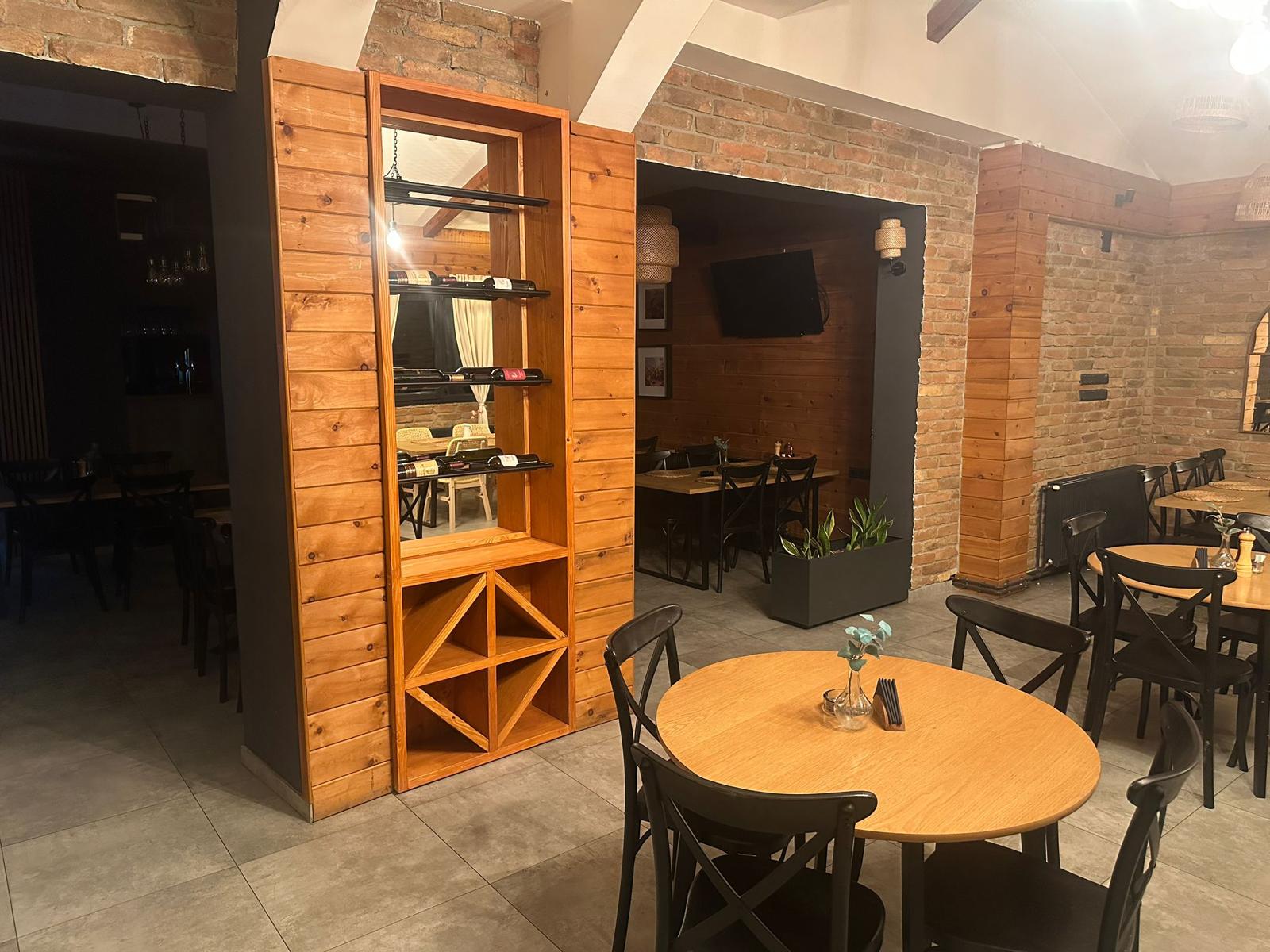
Our basta has been the main dining area since we opened. It’s a large enclosed garden behind the building, with a covered terrace section for when rain arrives mid-meal. There’s warm indoor seating too, but guests choose the garden every time the weather allows it. You can browse photos of our restaurant and garden here.
What is rostilj and why does charcoal matter?
Rostilj is the Serbian word for grill, and it refers specifically to meat cooked over open flames — traditionally fueled by drvo (hardwood) or drveni ugalj (hardwood charcoal), not gas or electric elements.
The distinction matters because charcoal gives a crust and smoke flavor that gas grills cannot replicate. Serbian grill masters tend the coals constantly, controlling temperature by spreading or banking the charcoal rather than turning a dial. Every piece of meat hits a different zone depending on what it needs: cevapi want intense direct heat, a pljeskavica needs a slightly cooler zone to cook through without burning, and vesalica needs quick, high flame to caramelize the marinade.
At Gostionica Karadjordje, the grill runs on drveni ugalj all day. It’s slower, more labor-intensive, and more expensive than gas. It’s also the only way to get the flavor right. If you want to know whether a Serbian restaurant takes its rostilj seriously, ask one question: what fuel do they use?
What traditional Serbian food should you not miss?
If you have one meal in Serbia, order these: cevapi with kajmak and raw onions, followed by Karadjordjeva snicla, with a shopska salata on the side. Finish with a Turkish coffee and a shot of homemade sljivovica (plum rakija).
Beyond the essentials, look for prebranac (slow-baked white beans with onions and paprika — deceptively simple, the kind of dish you think about for days), teleca corba (a clear veal soup served as a starter), and gurmanska pljeskavica (a stuffed burger with kajmak and cheese melted inside the patty). Ask about seasonal dishes too — in autumn, Serbian kitchens do extraordinary things with wild mushrooms, peppers, and quince.
For drinks, skip imported beer and try a domestic one — Zajecarsko or Jelen. Better yet, order the house rakija. In Serbia, homemade rakija is a point of family pride. Ours is made from local plums and aged in oak. We also carry a selection of Serbian wines from the Sumadija and Zupa regions that most visitors haven’t encountered outside the country.
Is Serbian food good for vegetarians?
Serbian cuisine is heavily meat-focused, but vegetarians can eat well if they know what to look for — the appetizers, salads, bread, and dairy dishes are some of the best parts of the meal.
Kajmak, ajvar, urnebes, shopska salata, srpska salata (similar but without cheese), seasonal grilled peppers, prebranac, gibanica (layered filo pastry with cheese and eggs), and zeljanica (spinach-and-cheese pie) are all either vegetarian or easily adapted. Fresh bread is always on the table.
We won’t pretend the menu is designed around vegetarian eating — it’s not, and most Serbian restaurants aren’t. But we’re always happy to put together a plate of everything we have that works. Just let us know when you sit down.
How do you order food in a Serbian restaurant?
In most Serbian restaurants, you sit down, a waiter brings the menu (jelovnik), and you order when ready — there’s no host stand, no waiting list, and no rush. Water and bread usually appear immediately without being ordered.
A few things that help: Serbian menus are often organized into predjela (appetizers), salate (salads), sa rostilja (from the grill), gotova jela (prepared dishes and stews), deserti (desserts), and pice (drinks). If the menu is only in Serbian and you’re stuck, just ask — nearly everyone under 40 speaks at least basic English, and restaurant staff are used to helping. Or point at what the next table is having. Serbians find this charming, not rude.
Tipping: 10% is generous and appreciated. Rounding up the bill is common for smaller amounts. Service is rarely included. Pay at the table — you don’t walk to a counter.
One cultural note: meals in Serbia are not fast. A proper lunch or dinner takes time. The waiter won’t bring your check until you ask for it — they’re not being slow, they’re being polite. Enjoy it.
Come find us
Gostionica Karadjordje is at Vojvode Putnika 34, Lazarevac 11550, Serbia — about 50 minutes from central Belgrade. We’re open every day from 08:00 to 23:00. Reservations are welcome by phone at +381 65 242 8180 or through our contact page. You can also find us on TripAdvisor.
We hope this guide helps you eat well in Serbia. If you make it to Lazarevac, the table is ready.